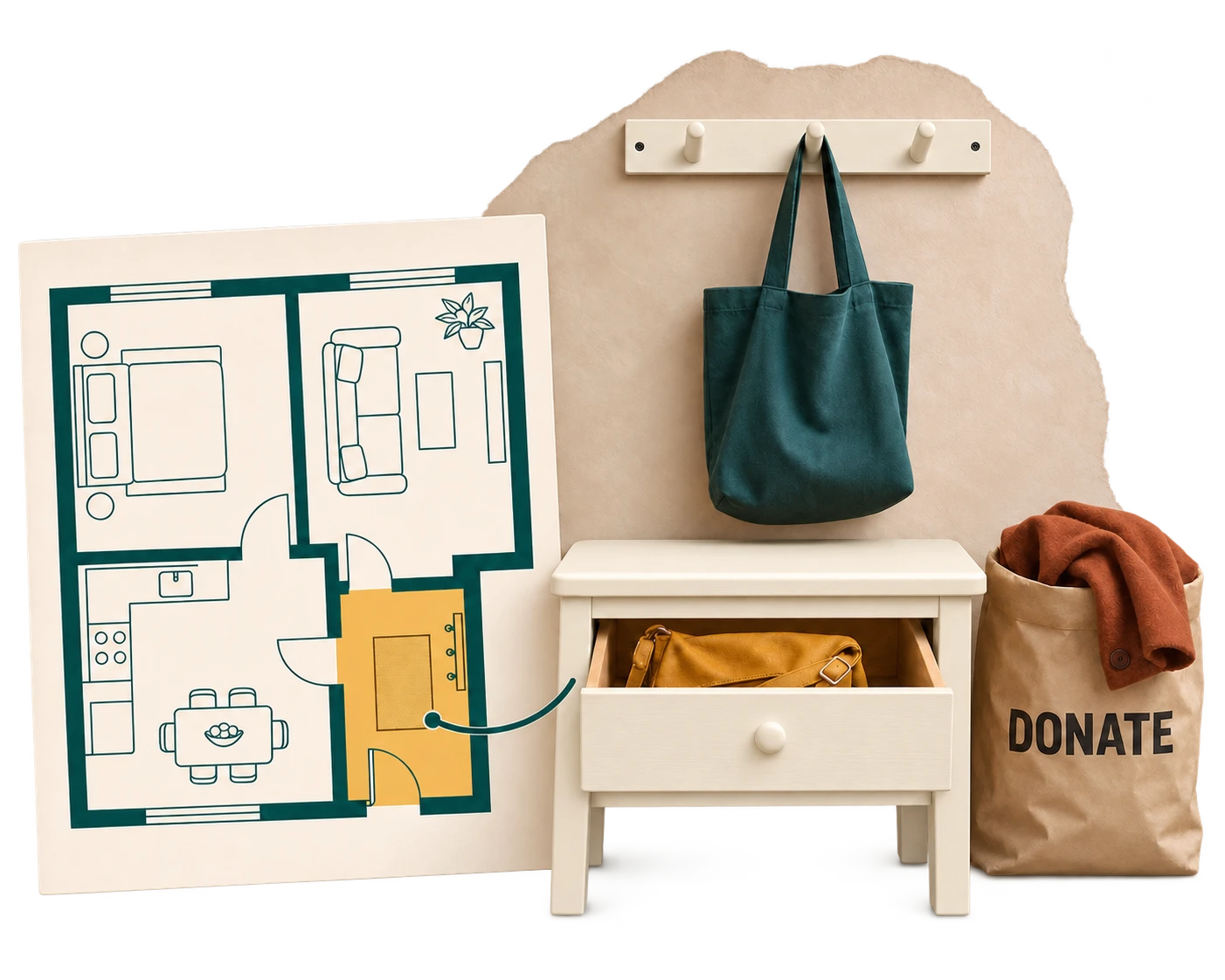
If you had told the younger version of me that I would one day run a business and write books all about organizing, I would have laughed until I cried. I was the girl with clothes covering the floor, piles on every surface, and a constant, low-level panic that someone might knock on my front door unannounced. Living in mess is exhausting. It drains your energy before your day even starts.
When people hear the word "organized," they often picture color-coded pantries with matching glass decanters and label-maker perfection. But real organizing has nothing to do with perfection. It is about functionality, breathing room, and giving yourself the gift of peace.
Here is what I truly love about getting organized—and the simple, everyday systems that make it stick.
Why We Fall in Love with Order
Organizing is not about having a showcase home to impress the neighbors. It is about how your home makes you feel when you walk through the door at the end of a long day.
When your home is organized:
- You stop hunting for your life. No more tearing the house apart looking for your keys, your kid’s matching shoes, or a clean set of sheets five minutes after bedtime.
- Your brain gets to rest. Visual clutter is visual noise. When the counters and shelves are clear, your mind automatically exhales.
- Tidying up takes minutes, not hours. When everything actually has an easy, designated home, resetting a room is just a quick sweep instead of an all-day weekend nightmare.
The Paper Brain: Why a Daily Planner Changes Everything
One of my absolute must-haves for staying organized isn’t a fancy acrylic bin—it is a paper planner.
When you try to keep your entire schedule, to-do list, project ideas, and grocery needs trapped inside your head, your brain goes into overload. You end up reacting to emergencies all day instead of proactively living your life.
Opening up a physical planner and mapping out the week gives your thoughts a container. Seeing your hours laid out in front of you lets you be realistic about what you can actually accomplish today. When a task is written down on paper, your brain no longer has to panic about forgetting it.
The Secret to Closets That Stay Tidy
We all have that one closet or cupboard that becomes a catch-all dumping ground. Baby items, extra blankets, stray lamps, half-finished projects—before you know it, opening the door feels like an avalanche waiting to happen.
Transforming a space like a closet doesn’t require thousands of dollars in custom shelving. It comes down to three basic steps:
1. Do a Ruthless Purge First
Before you run to the store to buy cute bins, pull everything out and be completely honest with yourself. If your child has outgrown the gear, pass it on. If an item is broken, toss it into a black garbage bag. Never organize clutter you don’t even use.
2. Use Low-Cost Open Bins
Simple fabric or plastic bins are magic. Instead of trying to keep tiny clothes or linens folded in neat, razor-sharp stacks that tumble over the second someone grabs something, designate a bin for each category. PJs in one, blankets in another, extra wipes on the top shelf.
3. Label Clearly (Even with Pictures!)
Labels are not just for you—they are for everyone else in your household. When a bin is clearly labeled, nobody can ask you, "Mom, where does this go?" For little kids, adding simple picture stickers or drawings makes putting away their own toys and clothes a breeze.
Your Five-Minute Challenge
You do not need to overhaul your whole house today. Pick just one tiny spot that is driving you crazy. Maybe it is the glove box in your car, the utensil drawer, or one shelf in your bedroom closet.
Set a timer for five minutes, toss the trash, donate the things you do not love, and see how much lighter you feel. Once you get a taste of that breathing room, you will fall in love with organizing too.