If you struggle with getting basic day-to-day adult tasks done, let me tell you something right up front: you are definitely not alone.
For the longest time, I wondered why "adulting" felt so overwhelmingly hard. I would look at how effortlessly other people seemed to keep their homes and daily schedules running, and I felt like there had to be something wrong with me. Everyday chores—the repetitive, unexciting stuff like unloading a dishwasher or folding laundry—felt mind-numbingly boring. If something is completely boring, forcing my brain to focus on it is like pulling teeth.
On the flip side, whenever I stumbled into something I found exciting, hyperfocus took over. I could easily spend twelve straight hours locked onto one single project, completely blind to the world, where pulling myself away felt like actual torture. If you have ADHD or suspect you might, that intense swing between total distraction and hyperfocus is probably all too familiar.
After a viewer named Finding Your Way introduced me to Jessica McCabe’s wonderful YouTube channel, How to ADHD, I felt an enormous wave of relief. Hearing someone else talk openly about these exact same struggles made me realize that feeling like a hot mess doesn’t mean you’re broken. More importantly, it helped me connect the dots on how organizing genuinely transformed my life.
The Clutter Connection: Calming the Outside to Help the Inside
Inside my head, things are often chaotic and noisy. For years, my physical environment looked exactly like the inside of my brain: piles of clothes tossed on the floor, surfaces covered in random stuff, and essential items disappearing into the void. Whenever I needed to leave the house, I would spend half an hour tearing the place apart just looking for my car keys.
What I eventually discovered was that physical clutter and mental clutter feed on each other. When your living space is a disaster, your brain has to work twice as hard just to navigate through the day.
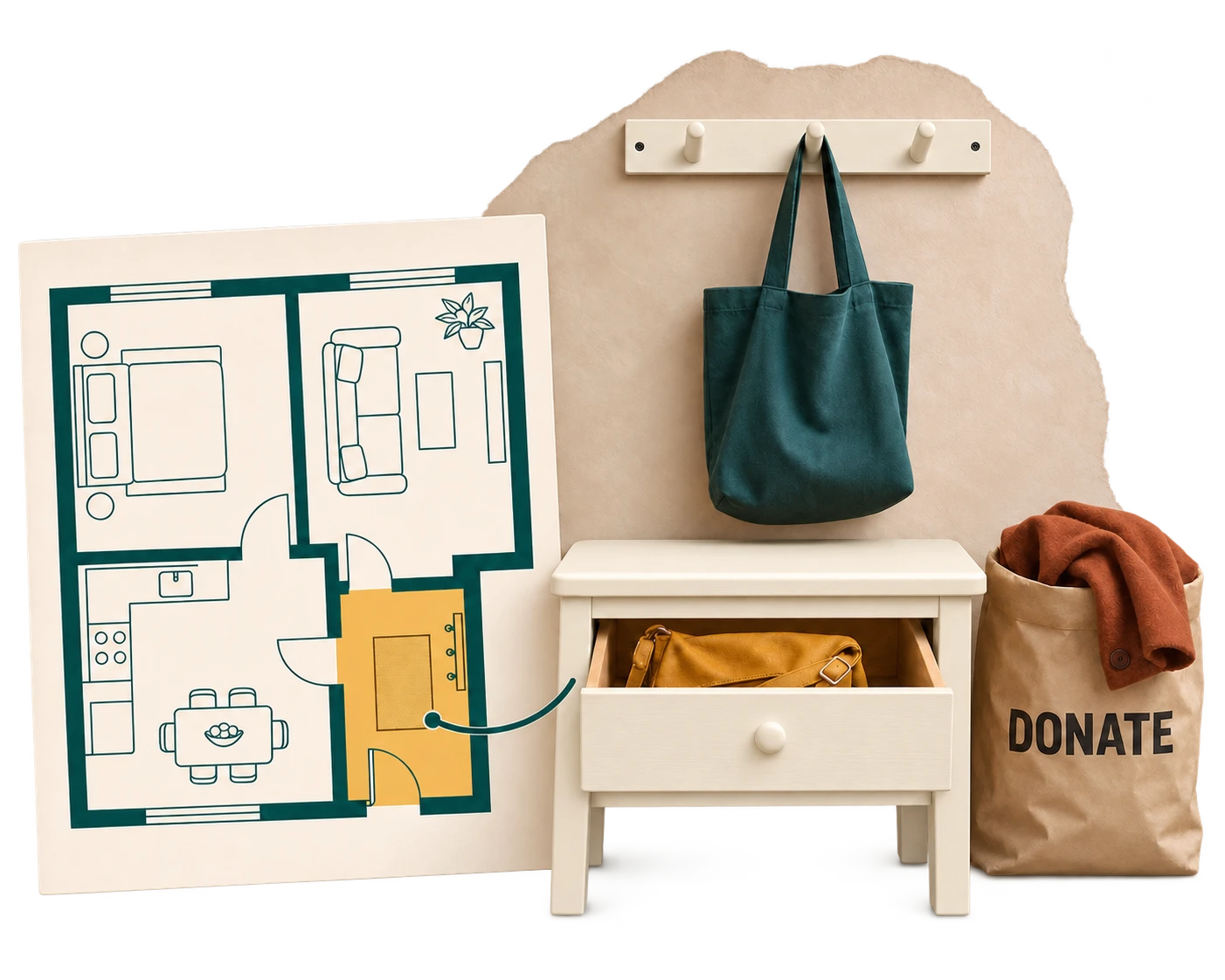
Getting organized did not suddenly cure my ADHD or turn my brain into a zen garden. But structuring my physical surroundings gave my mind breathing room. When I took the time to create simple systems—like hanging my clothes instead of leaving them in piles, or creating a dedicated drop spot so my keys were always in the exact same place—my daily stress plummeted. Getting it together on the outside helps quiet down the noise on the inside.
Break It Down into 15-Minute Chunks
When your brain is easily overwhelmed, the thought of "organizing the house" is completely paralyzing. It feels massive, vague, and impossible to finish, so you freeze up and do nothing at all.
The secret that completely changed the game for me was shrinking the goal into tiny, bite-sized pieces. I stopped trying to tackle whole rooms and started giving myself just 15 minutes a day to focus on one micro-space:
- Don’t organize the whole linen closet: Organize just half of a shelf, or sort through a single storage basket inside it.
- Don’t tackle the entire kitchen: Set a timer and declutter just one junk drawer.
- Stop when the timer rings: Celebrate finishing that one tiny area instead of feeling guilty about what is left.
Those fifteen-minute chunks gave me an immediate sense of accomplishment without burning out my focus. And over days and weeks, all those tiny completed projects added up to an organized home.
Put Your Routines Where You Can See Them
Another huge hurdle for an ADHD brain is that out of sight really is out of mind. Basic household rhythms that seem like second nature to other people—like loading the dishwasher and running it every night before bed—would honestly never even cross my mind.
I had to stop relying on my memory and start putting visual reminders directly in front of my face. I created simple written checklists for my morning and evening cleaning routines and placed them where I couldn’t miss them.
Having that concrete checklist right in my line of sight acted as an external prompt until the habits finally became routine. If you struggle to remember daily upkeep, don’t beat yourself up. Put a visual list on the fridge, on your bathroom mirror, or right beside the sink so your environment does the remembering for you.
Aim for Function, Not Magazine Perfection
We see so many pristine, picture-perfect homes online that it’s easy to feel like our spaces aren’t worthy unless they look like a showroom. But real homes have husbands, kids, dogs, cats, messes, and busy lives. You don’t need a huge budget, and you certainly don’t need to chase every trendy decor aesthetic.
Your home does not have to be beautiful to be functional. An organized space is simply one that works with your brain instead of against it. It means being able to walk in the door, put your keys down in their spot, and find what you need without a meltdown.
Pick one tiny, manageable spot today—just one drawer or a single basket—set a timer for 15 minutes, and give yourself the gift of a little extra breathing room.