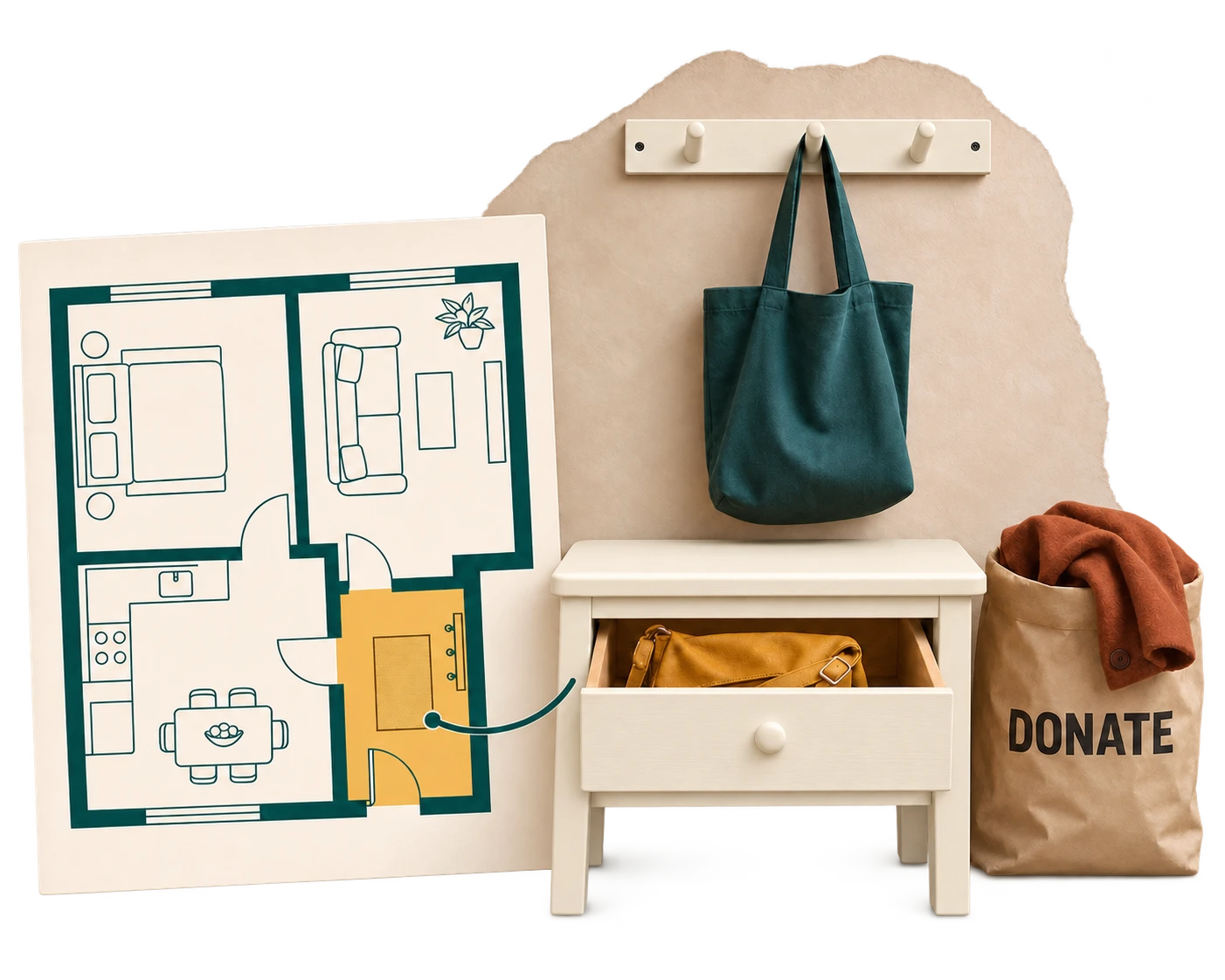
If your kitchen cupboards are bursting at the seams and you have bags of chips balanced on top of the fridge, stacks of canned goods crowding your countertops, or household supplies taking over the living room, take a deep breath. Storing extra food when you have limited pantry space can feel completely overwhelming, but you do not need a giant walk-in pantry to bring peace back into your home.
I will be completely honest with you: I am normally the person who buys groceries every three days. I like picking up fresh food in small batches because my kitchen storage has always been tight. In fact, right before I had to set up extra storage in my own home, I was teaching my organizing students that we ought to put down our wholesale cards and stop buying thirty-packs of snacks nobody actually eats. Then real life happened, I had to eat my words, and suddenly I desperately needed extra storage for bulk staples!
When you need to stock a few extra weeks of food and supplies without losing your mind to clutter, here are three simple ways to maximize your space and find room where you least expect it.
1. Ditch the Bulky Packaging and Go Vertical
Cardboard packaging is one of the biggest space thieves in any pantry. Think about prepackaged snacks like granola bars, cookies, fruit snacks, and oatmeal packets. The snacks themselves take up very little room, but their boxes eat up huge amounts of shelf space while leaving weird, awkward gaps.
The fastest fix is to pull everything out of its individual boxes:
- Grab a basket or bin: Toss all those loose snack packs together into a single open container. You can immediately see what you have, and you can fit double the amount in the same footprint.
- No basket? Use a box: If you do not have spare organizing bins lying around, do not stress. Take one of the sturdier snack boxes, neatly cut the top flaps off, and corral all the loose pouches right inside that one box.
- Stack upward: Baskets and square bins allow you to take full advantage of vertical space. You can stack them or layer sturdy items like packaged rice, pasta, and bread to take advantage of the empty height between shelves rather than letting that space go to waste.
2. Think Outside the Pantry (and the Kitchen)
Who says food has to live in a kitchen cabinet? When your regular cupboards are maxed out, it is time to look at unconventional organizing tools and furniture around your house. Remember, this does not have to be your forever setup—it just needs to work for right now.
- Hang an over-the-door shoe organizer: An inexpensive hanging shoe organizer placed on the back of a kitchen door, a pantry door, or even mounted directly on an empty wall creates instant vertical storage. The clear pockets are the perfect size for oatmeal packets, microwave popcorn, kids’ snacks, and seasoning mixes without eating up an inch of floor space.
- Borrow a piece of furniture: Take a fresh look at armoires, bookshelves, or dining hutches in other rooms. If you have an armoire holding decor or random linens you rarely touch, relocate those items temporarily and use the sturdy interior shelving for dry food storage.
3. Purge Non-Essentials to Carve Out a "Costco Corner"
Instead of letting extra food, cases of water, or paper products pile up in random corners of your living room, dedicate a specific spot in your home to act as your bulk backup station—your very own "Costco corner."
To make room, you will need to do a little purging:
- Pull out whatever is lurking under your bed or in hall closets. If you have not used or worn it in the last twelve months, let it go.
- Re-evaluate your clothing closets. We often give prime real estate to things we rarely use while our daily essentials end up scattered across the floor.
In my house, I freed up an entire closet that had been completely dedicated to dresses, blazers, and scarves I practically never wore. I pulled everything out, sorted it into keep and donate piles, and moved the few dress clothes I kept into our downstairs Harry Potter closet under the stairs.
That opened up an entire closet with existing adjustable Home Depot shelving. I pulled out extra storage baskets I had already been holding onto (yes, I admit I am a bit of a basket hoarder!), lined the shelves, and suddenly had dedicated homes for dry goods, extra chips, and snacks. My canned goods stay in my small kitchen pantry, but moving the overflow into that repurposed closet freed up huge amounts of kitchen space.
Take One Small Step Today
You do not need to turn into a full-scale prepper or remodel your house to feel organized. Having a few weeks of essentials neatly tucked into designated homes brings your stress level way down because everything feels calm and under control.
Take five minutes today and look around your home with fresh eyes. Can you unbox a couple of bulky snack packages into a bin, or hang an organizer over a door? Pick just one small spot, free up a little space, and give your extra food a proper home.