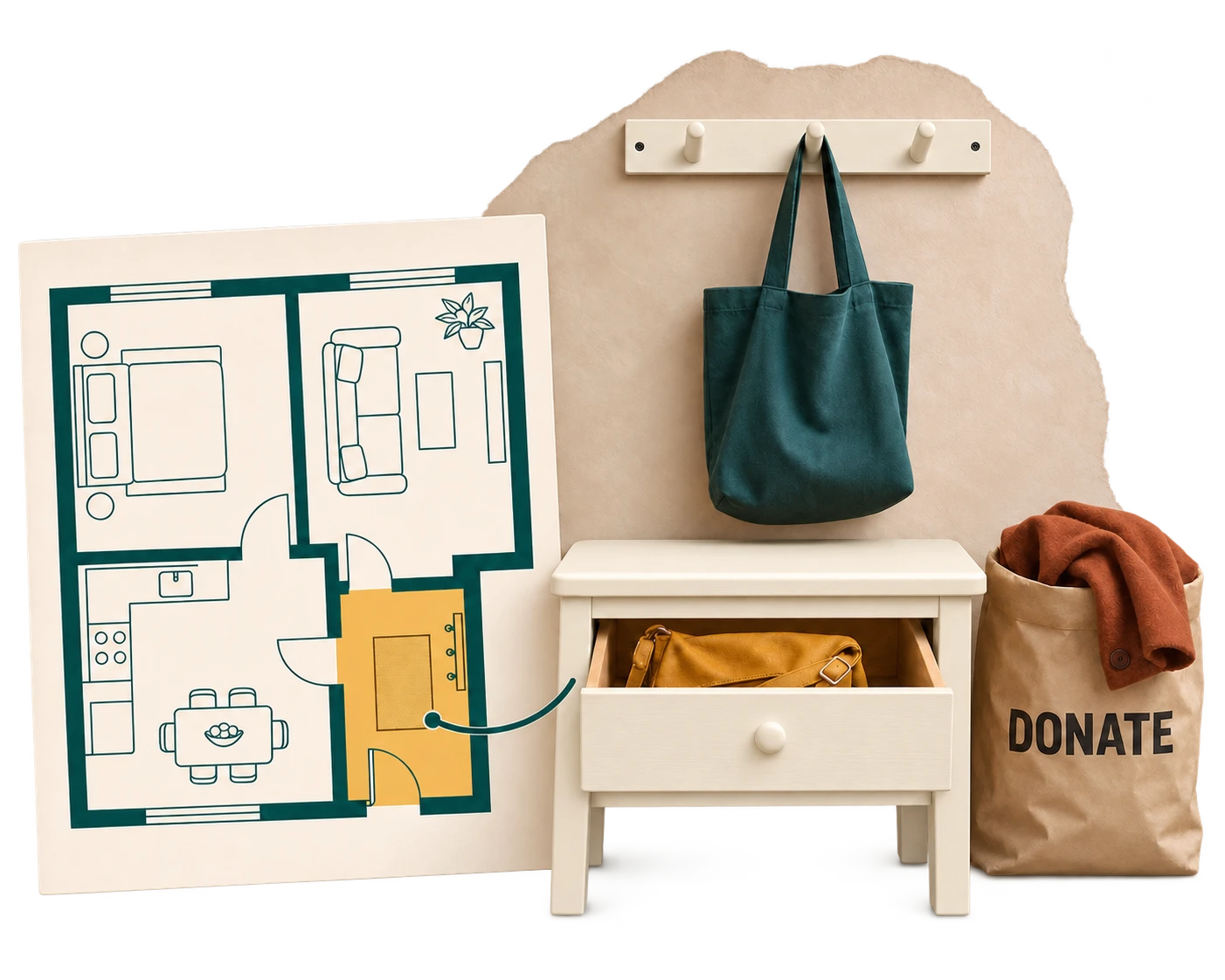
Moving into a smaller home is exciting, but let’s be completely honest: unpacking when you have downsized significantly is downright overwhelming.
My 85-year-old grandma recently made a massive transition, moving from her 3,000-square-foot, three-bedroom home into an 1,100-square-foot, two-bedroom condo. She sold a lot of furniture to start fresh, but she still had decades of cherished memories, holiday decor, and everyday essentials to fit into a fraction of her previous footprint.
To make things even trickier, she packed most of the boxes herself. When my family arrived to help her get settled, we opened boxes containing everything from kitchen utensils and toothbrushes to clothing and cat food all jumbled together. We had exactly one day to unpack, organize from scratch, and create a functional, easy-to-navigate home before unveiling the final space to her.
Whether you are helping a parent downsize or tackling a cluttered room in your own house, here is the exact step-by-step strategy we used to organize a tiny space from scratch.
1. Organize for the Space, Not the Stuff
When you don’t know exactly what is packed in every box, you can’t buy organizers for specific items. The solution? Measure and organize for the physical space itself.
Before we even began unpacking, I picked up general bins and baskets sized specifically to fit the condo’s shelves and cabinets. Instead of asking, “Where am I going to fit all these random items?” the question becomes, “What belongs in this particular cabinet to make everyday life easy?” Set up the boundaries first, and let the space dictate what stays.
2. Zone Before You Put a Single Thing Away
The single biggest mistake people make when unpacking is grabbing an item from a box and immediately trying to find a home for it in a cupboard.
Resist that urge! If you start putting things away right out of the box, you will end up reorganizing the same cabinet twelve times as you unearth more items from other rooms.
Instead, start by zoning:
- Open every box and sort by room. My husband Joe, my daughter Izzy, my mom, my stepdad, Alicia, and I spent the first hour opening the mixed boxes and shuttling items to their respective zones—kitchen goods to the kitchen, holiday decor to the spare room closet, and photos to the living room.
- Unpack the kitchen completely onto the counters. Before a single mug went into a cupboard, we laid out all the cookware, dishes, and pantry goods where we could see them.
- Assess the volume. Seeing the full picture lets you prioritize what deserves prime storage space and what needs to be stored elsewhere.
3. Prioritize Prime Real Estate (and Get Unconventional)
In my grandma’s condo, the biggest hurdle was the galley kitchen. The cabinets were itty-bitty—so shallow that standard dinner plates couldn’t even fit in the upper cupboards! On top of that, because my grandma is 85, mobility is key. She cannot be stretching on her tiptoes to reach high shelves or bending down to the floor to dig through bottom cupboards.
When organizing for mobility and small spaces, follow these rules:
- Keep daily essentials at eye level. The everyday dishes, bowls, glasses, and daily spices belong between waist and shoulder height.
- Break traditional rules. If dinner plates don’t fit in the upper cabinets, put them in a sturdy lower drawer or on an accessible open shelf. Organization isn’t about following traditional decorating rules; it’s about what functions best for daily life.
- Set up a dedicated morning station. My grandma drinks coffee and tea every single day, so that took top priority on the kitchen counter. We placed her mugs and everyday glassware right above the maker so her entire morning routine is right at arm’s length.
- Push rare items to the perimeter. Items used once a year (or backup supplies like extra foil and cling wrap) go in the hard-to-reach top shelves or way in the back.
4. Turn a Utility Closet into a "Mini-Garage"
Condo living often means living without a garage, basement, or shed. That means the utility closet has to work overtime to store tools, cleaning supplies, cat supplies, and household hardware.
To make this tiny footprint work hard:
- Use portable cleaning caddies. Instead of loose bottles scattered across shelves, corral household cleaners into grab-and-go caddies.
- Create a dedicated cord and cable box. We discovered stray cables and cords scattered in almost every box. Gathering them into a single labeled container immediately cleared out random drawer clutter.
- Group small maintenance essentials. Keep batteries and spare light bulbs together in small, clear bins so you never have to search multiple rooms during a power outage.
5. Upgrade Seasonal Decor to Wheeled Storage
Cardboard boxes are the enemy of practical storage. They deteriorate, attract pests, and are awkward to lift—especially for seniors.
In the spare bedroom closet, we unpacked stacks of old cardboard Christmas boxes and transferred the decor into stackable plastic totes with wheels on the bottom. Now, instead of lifting heavy boxes down from a shelf every December, my grandma can simply roll her holiday decor directly into the living room.
We saved the high top shelf in that closet for long-term paper storage boxes that only need to be accessed on rare occasions.
6. Macro-Sort Sentimental Photos and Memories
Downsizing decades of photos is emotionally draining if you try to organize chronologically. Don’t try to sort photos by year or month when you are setting up a home—use macro-sorting.
Here is how we tackled boxes upon boxes of loose pictures and frames:
- Ditch the dollar-store frames. My grandma had dozens of framed prints in inexpensive frames that took up huge amounts of space. We kept sentimental or heirloom frames for a gallery wall, but took photos out of the cheap frames, donated the frames, and kept just the pictures.
- Sort into broad, distinct tubs. We created four simple categories:
- Grandma’s childhood (photos with her parents and siblings)
- Her children when they were young
- Grandchildren and great-grandchildren
- Travel and special memorabilia
- Box oversized keepsakes separately. Anything too large for standard photo boxes went into a larger flat plastic tub to store neatly in the bedroom.
Your Small Next Step
You don’t have to downsize an entire house in a weekend to use these principles. If a small closet or your kitchen cabinets are frustrating you today, pick just one zone.
Pull everything out onto a clear table, separate the daily essentials from the once-a-year items, and give your everyday favorites the prime real estate. You will be amazed at how much lighter a small space feels when it’s built around how you actually live!