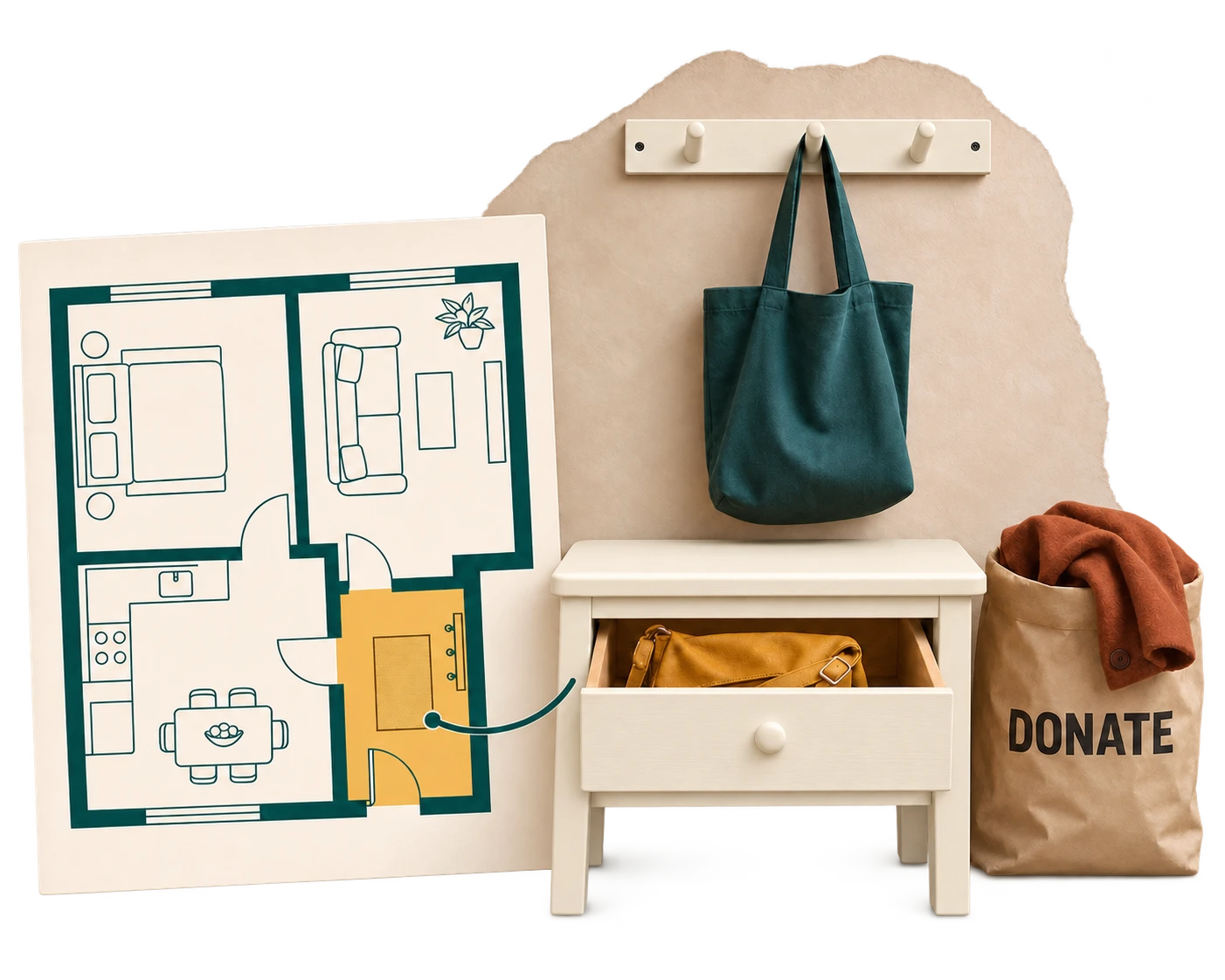
If you picture an organized house, what do you see? Pristine white counters, completely empty shelves, and matching acrylic bins lined up like a Pinterest board?
That is not real life, and it definitely is not my house.
With three kids, working from home, and running a business, our house gets used constantly. On top of that, I am not a minimalist. I love stuff. I have a mountain of craft supplies, more board games than a toy store, and plenty of everyday clutter. Yet our home stays tidy day in and day out—not because I spend hours cleaning or nagging everyone, but because we set up simple, low-effort systems that actually work for the way we live.
Here is a room-by-room look at what real-life organizing looks like, along with the everyday setups that keep our home running.
Rethinking the Mudroom and the Paper Trap
Our family comes in through the garage into a space that doubles as our mudroom and craft room. It does a lot of heavy lifting.
For Joe and me, shoes go into a slim IKEA shoe cabinet that hides pairs completely out of sight. The real secret weapon, though, is the shallow drawer right on top. I call it a landing strip. Wallets, keys, and loose pocket change will always create clutter if they do not have a dedicated home the second you walk through the door.
For the kids, we actually took the doors off the closet and turned it into an open mudroom. Kids are visual, and let’s be honest: they will not open a closet door, grab a hanger, and carefully hang up a heavy winter coat. They were dropping everything straight onto the floor. By switching to open hooks, simple cubbies for boots, and toss-in baskets for mittens and hats, their gear stays off the floor. It might not look like a glossy magazine spread, but function always beats perfection.
Right behind the door where their backpacks hang, we mounted a simple magazine rack on the wall. When the kids empty their bags, school newsletters, artwork, permission slips, and sports schedules drop straight into the rack before they ever touch the kitchen counter.
Workspaces, Cube Shelves, and the Laundry Landing Spot
Across the hall is the home office, where both Alicia and I have desks. The vertical wall space here handles business paperwork, weekly schedules, and incoming mail through a wall command center. Tucking incoming bills and to-do paperwork onto the wall keeps paper piles from invading living spaces.
To make a small room work hard, open cube shelving runs up the wall to house camera gear, business files, and electronics in sorted bins.
Down the hall in the laundry room, Joe built a custom folding table with open cubbies designed to slide our laundry baskets underneath. I am the first to admit that I often feel too lazy to fold and put away clean laundry right out of the dryer. Having designated cubbies for laundry baskets gives clean clothes an off-the-floor landing spot until someone has the energy to fold them.
In the basement family room—where we watch movies, play video games, and host sleepovers—we keep our huge board game collection in an armoire we bought secondhand. You do not have to purge the hobbies and things you genuinely love and use. You just have to let go of the things you do not use, and give what you keep a defined container. The kids’ toys in this room live in a cube shelf with picture-labeled bins, making cleanup completely self-explanatory.
Organizing the Kitchen by Zone (and Embracing Junk Drawers)
Our kitchen consistently stays clean, and the secret comes down to zoning and realistic habits:
- Zone by use: Store items right where you use them. Coffee beans and tea bags live directly above the coffee maker. Baking soda, flour, and cocoa powder sit in the cabinet directly above our prep station.
- Use the top of the fridge: Giant, open baskets up high hold bulky overflow that refuses to fit inside cupboards, like oversized family snack bags and lunch boxes.
- Rethink drawer real estate: The drawers near our kitchen table used to hold standard kitchen utensils. But because the kids do homeschool work and art projects at that table, paper and crayons always ended up scattered across the counters. I evicted the kitchen supplies and turned those drawers into a coloring and learning station. Store things where you actually use them!
- Have two junk drawers: Yes, two. Having dedicated spaces to tuck away random household necessities keeps those odds and ends from spreading across the counters.
Right off the kitchen in the dining room, a $60 garage sale buffet holds bulky dog food, leashes, extra placemats, and large baking dishes. Adding an inexpensive piece of secondhand furniture can often solve an awkward storage bottleneck.
Managing "Homeless Clutter" and Kid Bedrooms
Every home deals with items in transition: return packages, scratch-off tickets, gift cards, or random cords you have not put away yet. In our living room, we dedicated a small vintage armoire as an in-and-out station for "homeless clutter." When something does not have a designated spot yet, it goes into this armoire until we create a permanent home for it, keeping the living room surfaces completely clear.
Upstairs in the kids’ rooms, both Milo and Abby use IKEA Kallax cube units instead of standard dressers. Drawers with traditional folded clothing often end up messy within days. By using open cube bins inside the shelving, the kids can toss clean clothes directly into designated bins without struggling to fold them. The shelves also make use of vertical space to hold books, toys, and display items. Hanging Abby’s instruments on the wall freed up floor space, while under-bed storage keeps LEGO collections contained.
In the linen closet, rolling towels prevents the tall, precarious stacks that inevitably collapse when someone pulls a towel from the middle. Labeled baskets keep medicines and first-aid supplies easy to pull down and put away.
Master Bedroom Systems (and Coming Clean About the Dumpster Fires)
In our bedroom, an IKEA dresser with shallow top drawers catches everyday pocket items, passports, and loose change. Inside our closet, open baskets let me toss clothing away in seconds without folding.
Now for the honest confession: not every space in my house is organized.
Our master bathroom is an ongoing disaster zone. Joe walks in and shakes his head at the mess: curling irons left out, makeup on the counter, and piles of wet towels on the floor that sometimes block the door—the exact thing I yell at the kids for doing! Because I haven’t taken the time to create proper homes for everything in that tiny bathroom, it stays a hot mess.
The same goes for my under-stairs "Harry Potter closet." As a Ladybug organizer, my natural tendency is to hide clutter behind closed doors where I do not have to look at it. That closet is packed full of holiday bins and random overflow. When Christmas rolled around, it took a solid hour of climbing over boxes just to get the decorations out.
Nobody has a perfectly organized house from top to bottom. Organizing is not about achieving perfection or getting rid of everything you own. It is about setting up realistic systems where you need them most, so daily life feels easier.
Try This Today
Take five minutes and look at the one surface in your home that attracts clutter every single day—whether that is the kitchen island, the entryway bench, or your nightstand.
Instead of just clearing it off, ask yourself: What system is missing here?
If it is mail and pocket clutter, designate a single shallow drawer or basket as your landing strip. If it is kids’ gear, swap out closet doors or tight hangers for accessible hooks and open cubbies. Create one simple home for the items landing on that surface, and make putting things away as effortless as dropping them.