If you have ever stared at a messy room, felt your chest tighten, and wondered why keeping your home tidy feels so ridiculously hard, take a deep breath. You are not alone, and you are not broken. Most of us were never taught how to organize for our unique brains, so when our counters pile up or our closets burst at the seams, we blame ourselves.
I hear from thousands of people every single week who feel stuck in the exact same spots. Whether you are dealing with low energy, kid clutter, a partner who hoards knick-knacks, or the paralyzing fear of letting things go, let’s break down the most popular organizing questions with practical, no-shame solutions.
When Energy is Limited: The Tough-Love Truth
One of the hardest questions I get comes from people dealing with chronic illness, pain, or profound exhaustion: How do I keep up with organizing when I simply don’t have the physical energy?
Here comes some gentle tough love: the less physical energy you have to manage your home, the less stuff you can afford to own.
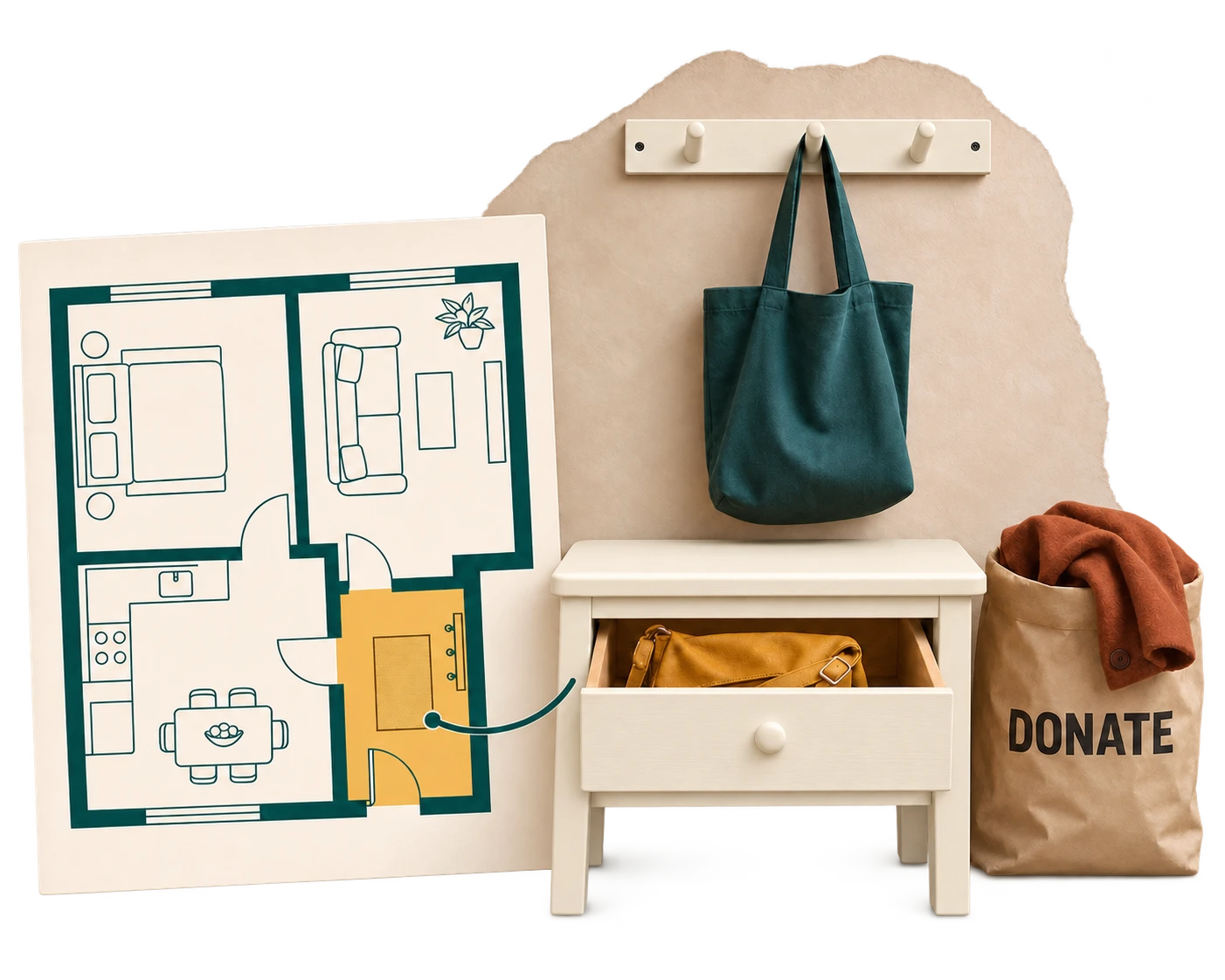
When your body is hurting or depleted, shuffling piles from one room to another or attempting elaborate, multi-step sorting projects will only wipe you out. Don’t worry about perfection, and stop trying to organize clutter. Your main job is simply getting excess items out of your house. Grab a trash bag or a donation box, fill it without looking back, and let friends, family, or donation pickup services haul it away. Holding onto things often boils down to fear and wanting control, but you deserve a home that supports your healing instead of draining your remaining spoons.
Cracking the Code on Kid Clutter
If you have young kids, you already know one universal truth: kids are dumpers. If you give them a massive toy chest with everything mixed together, they will dump the entire bin on the floor just to find the one tiny plastic superhero at the bottom.
To end the daily floor avalanche, switch to a categorized cube system. Use bins no larger than 12×12 or 13×13 inches, and dedicate each bin to a specific category (one for dress-up, one for action figures, one for play food). Add picture labels to the front so kids who cannot read yet know exactly where things belong.
When you first set this up, enforce the one-bin rule. Your children can pull out one bin at a time, but they have to put that category away before grabbing the next one. It feels like training a puppy at first and takes hands-on guidance for a week or two, but it builds the muscle memory of cleaning up. Once that habit clicks, you can expand to two or three bins at once.
Another game-changer? Toy rotation. Pack half of those sorted bins away in a closet or storage room and swap them every few weeks. Because kids are visual, tucked-away toys feel brand new when they reappear—like Christmas morning all over again—and your living room stays manageable.
Paralyzed by Your To-Do List? Cap It at Three
Planning is easy. Actually getting off the couch and doing the work? That is a whole different beast. Our brains are hardwired to look at massive lists, spot the enormous effort involved, and run straight to Netflix to preserve energy.
The fix is simple: do the planning crappier. Brain-dump everything swirling in your head onto a scrap piece of paper, ask yourself what will move the needle the most or has an immediate deadline, circle it, and then limit your actual daily to-do list to no more than three big things.
Do not clutter that list with daily non-negotiables like dishes or laundry. Keeping your focus on three meaningful tasks keeps overwhelm at bay. It also helps to know what drives you. Author Gretchen Rubin outlines this brilliantly in The Four Tendencies. I am an Obliger, which means I struggle to do things just for myself, but I will jump into gear if I tie the task to someone else—like inviting a friend over so I clean the house, or promising Joe a date night once I finish a big work project. When you know your motivational wiring, you can use it to your advantage.
Getting Your Family on Board Without Nagging
We have all done the screaming banshee routine: stomping around the kitchen, slamming dishwasher doors, and yelling about how nobody else ever pitches in. And guess what? It never works. Nagging just convinces your family that cleaning is miserable, stressful, and worth avoiding at all costs.
If you want your household to change, you have to let them mirror your behavior. Shift your mindset: clean and declutter your own spaces as a gift to yourself because you deserve a peaceful home. Start exclusively with your own wardrobe, your own nightstand, and your own desk. When your family sees that having less clutter makes you lighter, calmer, and genuinely happier, the dynamic shifts. You become the quiet leader of your home, and they naturally start pitching in without a single lecture.
What If Your Partner is a Collector?
Living with a spouse who wants to save every knick-knack, gadget, or childhood memento can test your sanity. When you try to set boundaries, you end up looking like the bad guy.
Instead, lean on what Dana K. White from A Slob Comes Clean calls the Container Concept. A house is a container, and your shelves, drawers, and closets are smaller containers. Counters and floor piles are not containers.
Designate a specific container for your partner’s treasures—whether that is a single closet, a shelving unit in the garage, or a display case in the living room. Everything they want to keep can stay, as long as it fits inside that agreed boundary. Once that shelf or closet is packed full, the container becomes the bad guy. You do not argue about what is junk and what is valuable; they just have to decide what leaves so the new items fit.
Fear of Regret and the Scarcity Mindset
Many of us hold onto things out of pure scarcity anxiety: What if I need this ten years from now? What if money gets tight?
Having lived in poverty for a long time, I used to buy in bulk constantly, cramming a tiny basement full with a massive "Costco corner" of paper towels and pantry items because I feared I would not have money tomorrow. But hoarding that volume did not save money. Half of it expired, got lost, or cluttered my home so badly that cooking and living felt stressful. When I finally broke that cycle, I realized something freeing: the more stuff I owned, the more anxiety I felt.
People often ask how to cope with the fear of decluttering regret. The honest answer? You might occasionally give something away that you later wish you had kept. But living with a rare twinge of regret is infinitely better than living every single day buried under suffocating clutter. Clutter drains your energy, saps your peace, and steals your time.
Finding Your True Organizing Style
If you have ever taken a personality test or quiz and felt confused because the results did not fit, strip away the labels and look at two fundamental questions:
- Are you Visual or Hidden? Do you need to see your everyday items out on open shelves, pegs, and clear bins to remember they exist, or does seeing items out make your brain feel cluttered and anxious? (Visual organizers love hooks and open storage; hidden organizers prefer solid cabinet doors and opaque bins).
- Are you Macro or Micro? Do you thrive on broad categories where you can toss things into one big basket and move on, or do you genuinely enjoy detailed sub-folders and meticulous compartments?
There is no moral value attached to being a micro or macro, visual or hidden organizer. You might even prefer visual macro storage in your craft room and sleek hidden cabinets in your kitchen. If you want to dive deeper into custom systems that fit how your brain actually works, you can check out my books or explore the online organizing course.
Your Small Next Step Today
Do not try to overhaul your entire house before bedtime. Pick one tiny boundary—a single bathroom drawer, the junk mail tray by the door, or one surface in your kitchen.
Grab a bag, toss the obvious garbage, let go of three things you no longer use, and give yourself some grace. You do not need a picture-perfect home; you just need a home that works for you.