Your clutter is not the bad guy. I know that sounds wild when you are standing in your kitchen staring at countertops buried in random receipts, rogue hair ties, and unopened mail, but hear me out: your mess is actually trying to help you.
For years, I struggled so hard with clutter. I would spend entire weekends cleaning and organizing, only to wake up the next morning and find everything trashed again. I thought I was broken. It was not until I stepped back and actually looked at the mess that the lightbulb went off. Those piles were not personal failures. They were giving me instructions. They were showing me exactly where and how I needed to organize.
Now, whenever I walk into a client’s home, the very first thing I ask them to do is keep the mess out. I need to see the piles, because your clutter is an honest roadmap to your everyday habits. Here is how you can read your own clutter and design systems that keep your home tidy effortlessly.
The 6 Clues Your Clutter Is Giving You
Instead of feeling guilty the next time you walk past a dumping ground, put on your detective hat. Your clutter is revealing six crucial clues about your home.
1. Where Things Naturally Belong
Look at where things naturally accumulate. If you drop your keys, sunglasses, and mail on the kitchen island every single day, trying to force yourself to walk down the hall to file paperwork in an office closet is never going to work. Long-term success comes down to putting the organizing system right where you naturally drop your things. If paper piles up on the kitchen counter, install a clutter catcher or a dedicated paper tray right there. If cords and phones wander all over the counter, set up a charging station on that exact spot.
2. What Is Truly Important to You
The spots with the heaviest clutter often hold the things you love most. If you have stacks of novels and magazines scattered across tables and beside your bed, you are a book lover! Your home is crying out for a dedicated, cozy book nook. If paints, sketchbooks, or sewing supplies are spread across your dining room table, do not hide them in a back room you will never use—create an art station right there in that room. Let your clutter celebrate what matters to you.
3. Your Natural Organizing Style
Look at the everyday items you use to get ready in the morning. Is your toothbrush, hairbrush, skincare, and makeup sitting out on the vanity counter? That means you are likely a visual organizer. You need to see your everyday essentials to remember they exist, so a system that hides everything inside opaque cabinets behind closed doors will fail every single time. Open your drawers, too. Are they tidy and segmented, or are they a jumbled drop-zone? Letting your everyday routines define whether you need visual open storage or loose toss-in bins makes all the difference.
4. What Systems Need Tweaking
Your piles will tell you immediately whether an organizing experiment worked or flopped. If you set up an elaborate filing system for your mail and papers still end up dumped in a pile on the counter, that system failed the test. Pivot! Try an open, stacking desktop tray instead. If your car keys are always wandering, test a wall hook. If you find you hate using the hook and leave them on the console, switch to an open drop tray. What works is whatever keeps your home tidy with the least amount of friction.
5. Hidden Storage Bottlenecks
If your family kicks their shoes off in a mountain by the front door every afternoon, that is not rebellion—it is a storage mismatch. Your family is simply not a "put shoes away in the closet" kind of family. Adding an entryway shoe cabinet, a low shoe rack, or a large woven basket right where their shoes get kicked off solves the problem instantly. Work with your real-life habits, not the imaginary habits you wish you had.
6. Where You Are Truly Overwhelmed
Sometimes clutter is not an organizing problem; it is a volume problem. If you constantly have a sink full of dirty dishes spilling onto the counters, you probably own too many dishes. If dirty clothes are perpetually carpeting the bedroom floor, you have too many clothes. And if toys have swallowed your living room floor, your kids are overwhelmed by the sheer quantity. Clutter shines a bright spotlight on the categories that are stressing you out and begging for a decluttering purge.
Real-Life Hotspots and Simple Fixes
Ready to match your biggest clutter pain points with dead-simple fixes? Here is what your home is telling you:
- The Trail of Coffee Mugs: If used mugs are migrating all over your house, you love your brew. Create a dedicated coffee bar or tray with mug hooks, sugar, spoons, and accessories all grouped in one spot so you naturally return everything there.
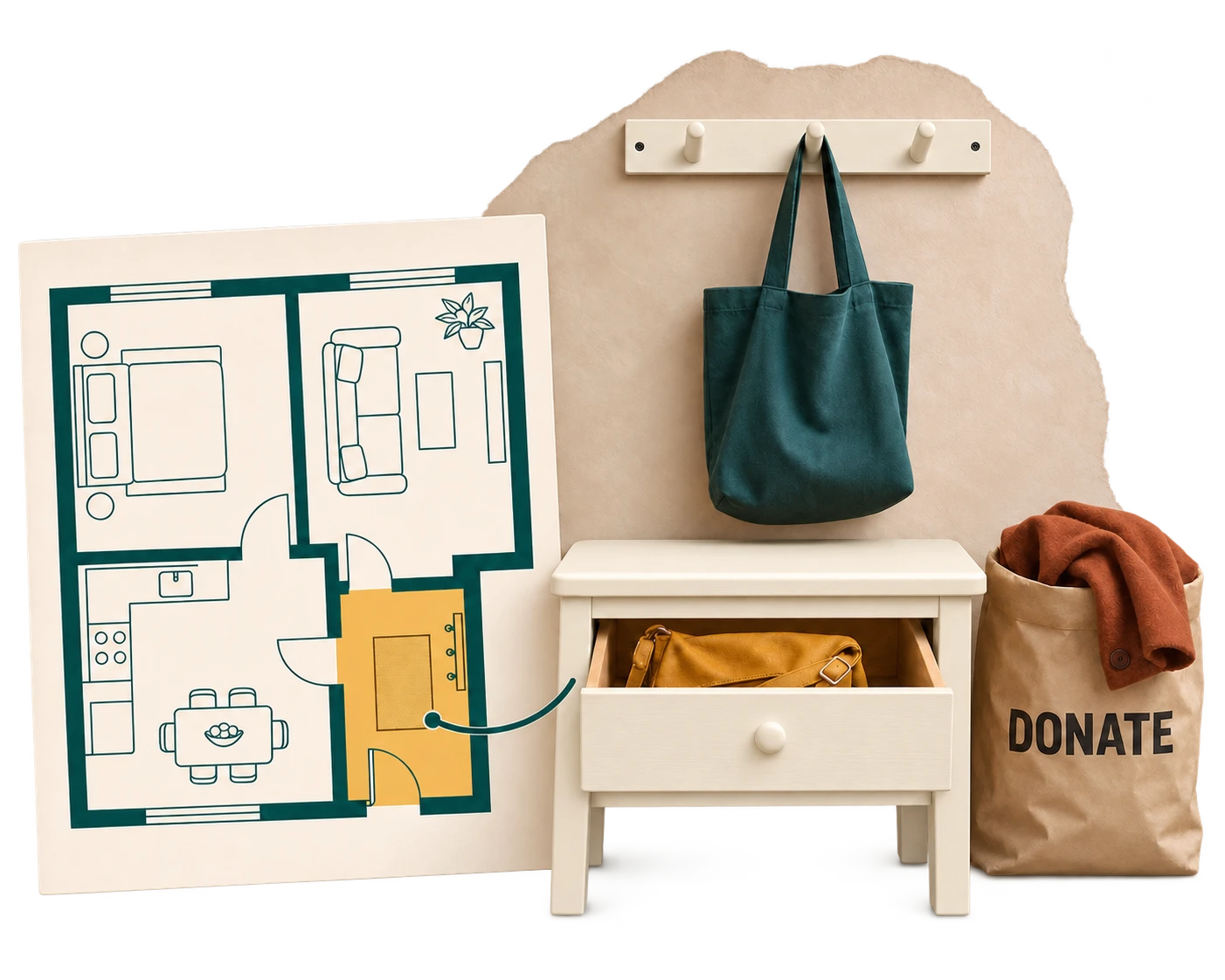
- The Entryway Bag Avalanche: Backpacks, work bags, and reusable grocery totes dumped on the floor are screaming for easy hooks. Even if you have a hall closet, hooks beat hangers every day of the week.
- The Jumbled Junk Drawer: When drawers turn into a chaotic mess, you need boundaries. Grab drawer dividers to create small compartments so you can still toss items away in two seconds without them turning into a tangled nightmare.
- Countertop Chaos and Paper: If your kitchen counter is always covered in stray receipts, school forms, and flyers, your kitchen is your home’s central command post. Carve out a tiny corner for an inbox or paper tray. (If paper is your personal nemesis, check out my video on banishing paper clutter for extra strategies!)
- The Living Room Toy Takeover: If your kids constantly drag toys from their playroom into the living room, build a play station right where they actually play. A low cubed shelving unit with labeled bins or a storage ottoman keeps toys contained without fighting their natural play habits.
- The Desk Hot Mess: Sticky notes, notebooks, and scattered pens mean you are a visual worker. Use bulletin boards, wall pegboards, and vertical desktop stands to get your papers up off the flat surface where you can still see them.
- The Bedroom Wardrobe Disaster: If clean and dirty clothes are piling up on chairs and floors, do a 25% purge first. Then switch to systems that match your real habits: use open wall hooks if you hate hangers, or try stackable laundry hampers so sorted laundry can be tossed in without folding.
Your Next Step Today
Stop looking at your home’s clutter as something to hide in shame before company comes over. Walk through your home today, pick one single hotspot that is driving you crazy, and ask yourself: What is this pile trying to tell me?
If you want a little extra daily support to tackle those trouble spots step-by-step, come join the free 30-day declutter challenge. Just five minutes a day can completely transform the way your home feels!